
1984: One Red Balloon.....
I cut my teeth on film & animation

It was the year that we discovered that George Orwell was closer to the truth than expected. The broadcast commercial industry was booming; in the service of the perpetually expanding economy, film production companies were popping up everywhere. Jaded by my experience at Clearwater, and disappointed with the inneffective and insensitive management, I jumped at the chance to join a small outfit in Central London who were fielding a number of commercials directors and taking on work from all over Europe. I was initially employed as Art Director; supplied with a car, a parking spot, and a retainer, and so joined the team working on a number of medium-profile brands from across Europe. The first such film that I became - I’ll say ‘embroiled’ in - (because it turned out to be a an Anglo-Italian political joust), was for the Italian company Motta, whose flagship product Pannetone, was up for a Christmas relaunch using the best SFX that the UK had to offer. I have to say that we did a cracking job. We built a HUGE model set stretching back into the darkness of Filmfair’s studio out near the airport - Twinkling Alpine village in the distance, sweeping fields of glistening white snow, and a huge forest of miniature Christmas trees in the foreground, branches draped with literally THOUSANDS of fibre-optic harnesses, each fed by a projector complete with rotating colour wheel. The effect was quite astounding.
There’s Always a Catch…..
Yes, it was spectacular, (and expensive)… but the fly in the ointment was Luciano the Art Director from Milan. He hated it. For years he’d presided over a procession of safe, live action Motta Christmas commercials, and suddenly, the agency wanted to change tack and go for some cutting edge model animation. It was a fiasco. We couldn’t get beyond his incessant need to keep changing things. Now one of the differences between stop-frame animation and live action is the sheer logistics of setting up a shot. With live action, you can shoot your scene with actors, and then, spontaneously, if an idea occurs, you can shoot a different version, and the ability to create ‘on the fly’, as it were, is a major component of a good director’s vocabulary. Real-world Stop-frame, especially if it is pre-synched to a soundtrack, needs to be written like music and bar-charted. Luciano didn’t like that, he didn’t have any experience of animation, aand didn’t see why we couldn’t shoot endless variations. We had to school him. With Live-Action, 35mm film passes through the gate of a camera at 24 frames per second, if an animated shot takes, shall we say four seconds, then that’s roughly a hundred frames. A complex animated set up might take ten minutes to move every element before the next single-frame is taken. So that’s around a thousand minutes, or a little over SIXTEEN hours for a single four-second shot. (from a thirty-second commercial) That’s roughly two days of studio time - in those days it was very impractical to stop a shot mid-way and carry on the next day, because physical elements in the set could relax under gravity overnight - lights start up with a slightly different colour temperature, flag or reflector stands might sag a little. I’m exaggerating somewhat; these days it’s much easier to digitally process things and minimise the glitches that used to be impossible to resolve back in the day. Anyway, We got it (nearly) right in the end. Luciano wasn’t happy, but the agency and Motta were - so we moved on…
Cutting My Teeth…..
I’d been working as an Art Director for a few months for the company - Red Balloon Films, when the Executive Producer said to me - ‘Why don’t you shoot a short animated film of your own, and then we can sell you as a director, too…’ This was a great opportunity. I’d been around commercials studios for around four years by this time; watched countless commercials being set up and filmed - sat through production meetings, discussed shots, got to know cameras, lenses, lighting - rigging, and the process of calibrating model and camera movements in single-frame detail well enough to sit in the director’s chair. So I made my film - it was a minute’s worth of glorified product shots (sadly lost in the archives, somewhere) - I made the models (fruit, amd little sculpts) - storyboarded the succession of shots, bar-charted the thing to the opening of Beethoven’s ‘Waldstein’ sonata, and we shot it over a week, (I think), in the company’s studios out near the airport.
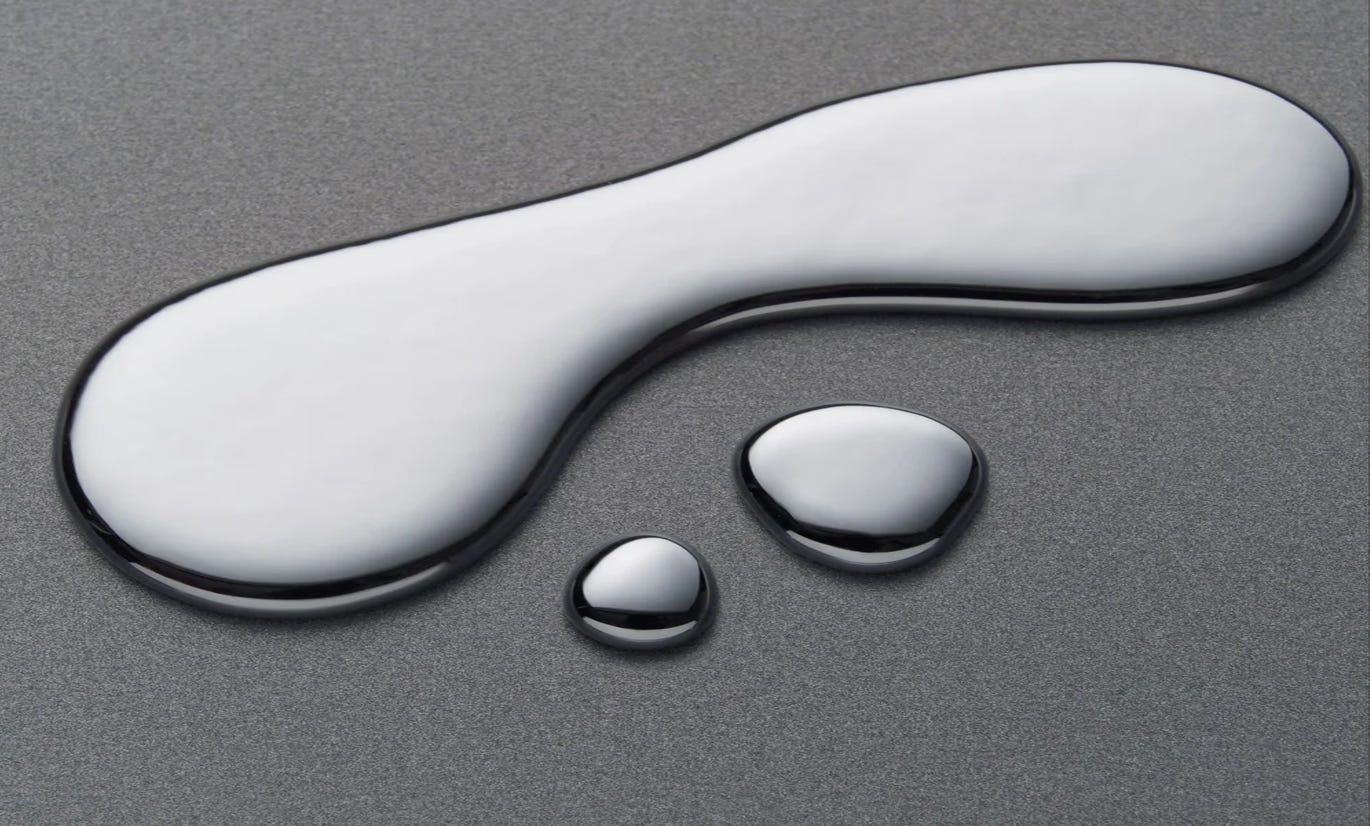
The opening shot was somewhat concerning. We were masked and gloved because it involved placing progressively coalescing drops of mercury on to a flat surface in time with the music, until they formed a mirror, which we then carefully replaced with a conventional glass one. Then the action began, reflected in the mirror, and the film proceeded. Fruit sequentially fell into shot, was rolled away, transformed and animated; the surface dissolved into a richly textured oak table, ,and the film drew together as a panorama of a carefully arranged composite of fruit, cheese, wine - silver bowl, and tastefully composed velevt drape…. the point being to create a stunning ‘beauty’ shot that would be attractive to a potential advertiser as an example of what we could achieve as a company, with me at the helm… ‘Look how good we can make your product appear!’
The Balloon Bursts…..
In the event, my career with Red Balloon Films as a director amounted to about fourteen films - European Commercials, and ‘science clips’ (product demos) - It was a stimulating time, I learned a lot, and it prepared me for my next professional engagement - with Oxford Scientific Films, who at that time were the premier natural history film unit in the UK. They possessed an armoury of cutting edge camera equipment, with motion-control rigs, high-speed capture, and rooms full of novel rigging gear. which I was very happy to employ as a director for their commercial wing…. Mostly, I shot the short, ‘in-commercial’ scientific product demos, close-ups of washing powder doing it’s thing - shampoo curing dandruff, milk splashing in slow-motion onto cornflakes, etc etc. In these cases I would make the model, create a storyboard, and film the sequence. I lasted for about a year - I was actively engaged in several other roles in the industry at the same time. OSF Films tended not to venture into the realms of stop-motion animation, but I was animating commercials here and there, as the opportunity arose… Some of them were quite prestigious - I worked with the highly influential director Tony Kaye on a series of British Rail Commercials:
At this time I was on the cusp of broadening my remit in the industry, and striking up a relationship with FilmFair - and the great Animator Barry Leith - responsible for Paddington Bear - The Wombles, and various other high profile TV shows.. From then on there would be many, many commercials which were regarded highly by the establishment…. I either worked as an assistant - or I did the animation; When there was little animation work around (it came in phases) - I would concentrate on modelwork & illustration. By this time, my network was fairly extensive, and the work didn’t have too many gaps in it…..